
For a while there it felt like rhythm cycling was being written off. The headlines were all about connected fitness at home, then about strength training, then about reformer Pilates taking over every vacant retail space in the city. If you teach rhythm, you have heard the whispers. Is the dark room still selling? Are people tired of tapping back?
Then June happened.
Rocycle, the Amsterdam institution that basically invented European rhythm, opened its first US flagship at 799 Broadway in Greenwich Village. Nine thousand square feet, one Rocycle studio, two Roform reformer studios, and a price point that made New York do a double take. Twenty dollars to drop in. That is not a typo. In a market where thirty five dollars is the floor, Rostudios, the parent company behind Rocycle and Roform, came in with over forty million dollars in growth capital and a very clear message. Rhythm is not dead, it is just getting bigger, more immersive, and more integrated.
I have been teaching and certifying indoor cycling instructors for nine years. I have seen the first boutique boom, the Peloton surge, the post-pandemic shakeout. What is happening right now in 2026 does not feel like another trend cycle. It feels like a full rebuild of what a rhythm studio is supposed to be.
Let me break down what that forty million really means.
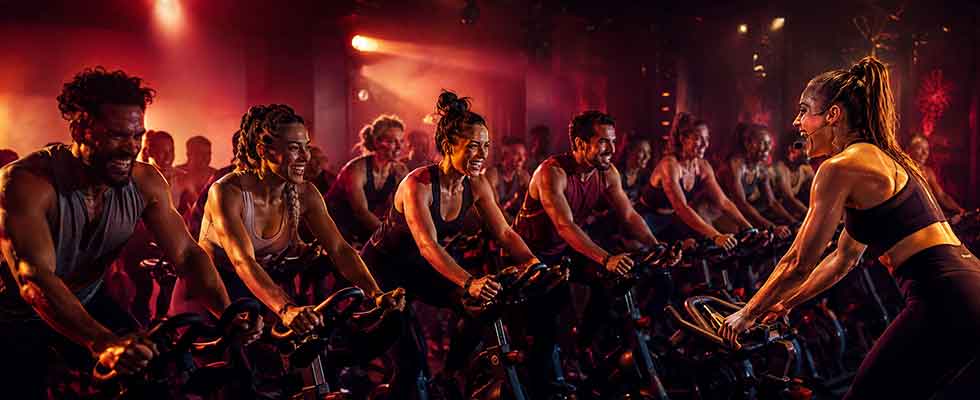
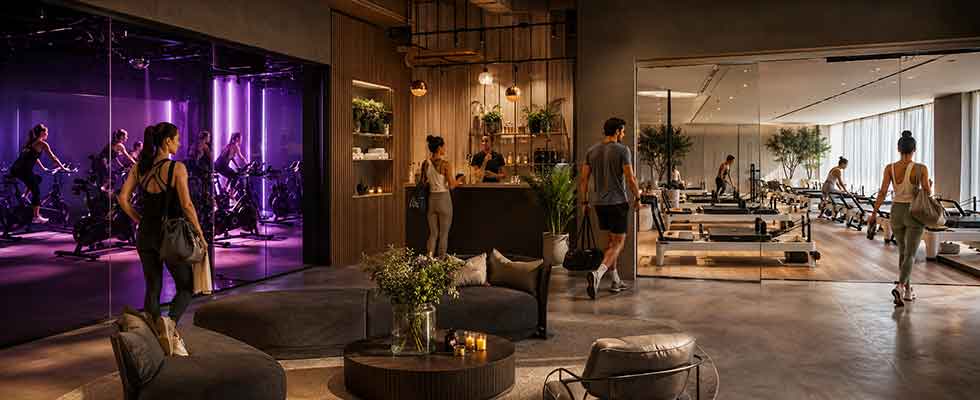
First, it signals that investors are betting on operators, not just bikes. Rostudios did not raise money to open one cool studio in New York. They raised it to prove a model that can scale across the US the way it already scaled across the Netherlands, Belgium, and Germany. Their model is not a cycling studio. It is a rhythm house. You walk in and you can ride, you can reform, you can grab a shake, you can stay. That matters because the economics of a single-modality studio with forty bikes are brutal in 2026. Rent is up, instructor talent is expensive, and member expectations are higher than ever. By pairing Rocycle with Roform under one roof, you double the use cases for the same member without doubling acquisition cost. You also solve the rhythm problem we never like to talk about. Not everyone wants to ride six days a week. Their knees, their schedule, their mood does not want it. But they will reform three days and ride three days if you make it easy and keep the music, the vibe, and the community consistent. That is what Rostudios is doing.
Second, the money is chasing a different price ladder. When Rocycle announced twenty dollars for a drop-in, a lot of New York owners gasped. It is significantly below typical boutique pricing. But it is smart. It is how you fill a nine thousand square foot space in Greenwich Village. It is how you get the NYU student, the young professional who left SoulCycle during the pandemic, and the tourist who will not pay forty dollars to try something new. It is a volume play funded by venture, not by per-class margin. For independent studio owners reading this, do not panic and drop your prices to twenty. You cannot compete with venture subsidized pricing. Compete with depth. Your advantage is coaching, community, and the kind of HEARTSPIN-style programming where people know your name and know your choreography. The big players can buy screens, they cannot buy your room.
Which brings me to the screens.
If forty million is the business story, cinema-size screens are the experience story. And they are everywhere this year.
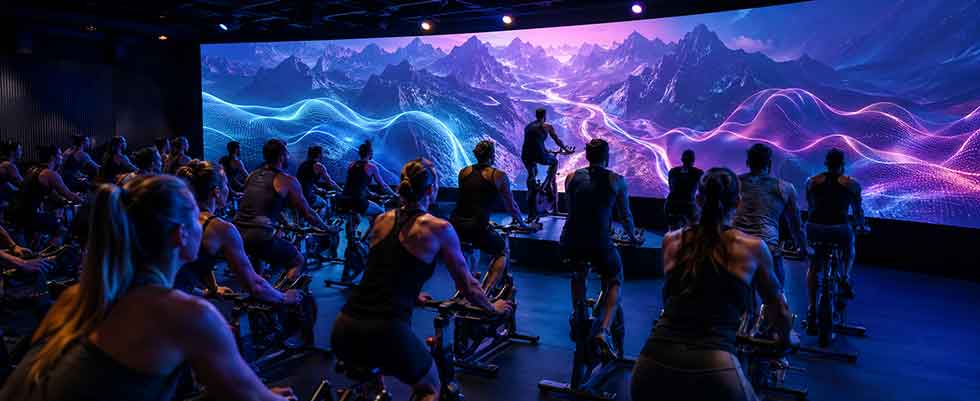
I went from teaching with a candle and a great playlist to getting asked to spec projectors. The shift is real. Scotland just opened what is being called its largest immersive cycle studio at Grangemouth Sports Complex. More than forty bikes, a three point one meter tall screen that shows digitally created worlds with immersive sound. The marketing copy says you cycle through worlds. That is accurate. You are not watching a music video, you are inside a ride that reacts to the music.
The classic example everyone references is The Trip from Les Mills, which pioneered projecting different sceneries on cinema-scale screens to transport participants. That was considered experimental five years ago. Now it is table stakes for new builds. In Toronto, one of the largest studios in Canada installed a two hundred eighty five inch screen with a Christie laser projector, seventy five bikes, surround sound, music-synced lights. The intention was to transport members to roads all over the world. In Brooklyn, there was IMAXShift, a concept that put spin classes inside IMAX theatres. You did not face the instructor, you faced the screen. People thought it was a gimmick. It was not. It was a preview.
What does this mean for rhythm specifically? Rhythm has always been about music first, movement second, visuals never. The dark room was intentional. No mirrors, no distractions, just beat. Immersive tech flips that. It keeps the dark but replaces the void with a world. And when done right, it makes rhythm more powerful, not less.
I have been experimenting with this in my own HEARTSPIN classes. If you have ever taken one, you know we ride on feel, on heart rate, on connection. Adding visuals does not mean adding a leaderboard. It means adding reactive environments that pulse with the power zones. The new intelligent cycling visuals that are music reactive are built for exactly this. Focus, motivation, energy, without making it a race. You can keep the tap backs and the soul, and give the rider a mountain to climb at the same time.
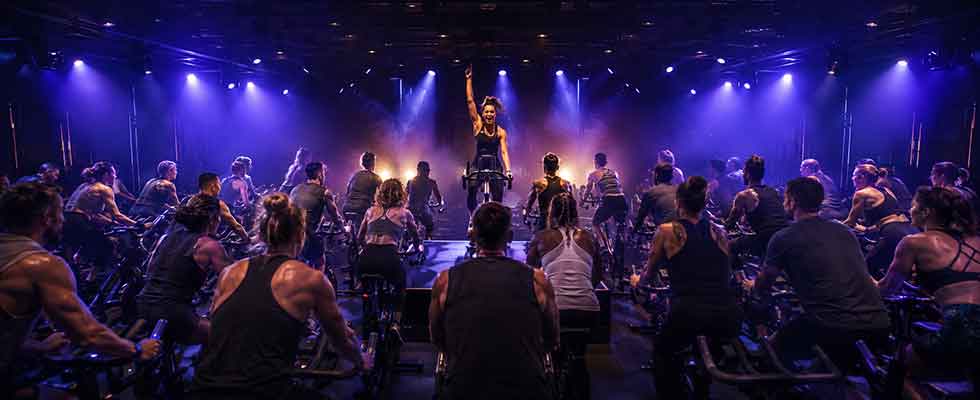
The best studios in 2026 are not choosing between instructor-led and screen-led. They are doing both. Instructor in the center, screen wrapping the front, lights tied to the BPM, sound with twenty seven speakers like Rocycle did in its early Amsterdam flagship designed by XML Architects. That soundproofed, twenty seven speaker design was 2016. Now add a cinema screen and you understand why people are lining up.
There is a third shift that is quieter but just as important. Some studios are trading bikes for reformers altogether. If you walk any high street in Vancouver, London, or New York right now, you will see it. A cycle studio that was forty bikes last year is now twenty bikes and ten reformers. Or zero bikes and twelve reformers. That is not because rhythm failed. It is because reformer has better margins per square foot and lower instructor burnout. You can run six reformers in the space of fifteen bikes and charge more per head. For landlords, it is attractive.
So why am I still bullish on rhythm?
Because rhythm does something reformer cannot do. It gives you collective joy. It is a concert, not a workout. People come for the workout, they stay for the feeling of forty people moving as one on the drop. You cannot replicate that on a reformer. You cannot replicate it on a leaderboard ride either. The studios that will win in the next two years are the ones that understand that immersive tech should amplify that collective joy, not replace it.
Here is my playbook if you own or teach in a studio right now.
One, audit your sound before you buy a screen. A cinema screen with a bad sound system feels like a cheap movie theatre. A great sound system with no screen still feels premium. Rocycle built its brand on immersive music experience first.
Two, think in two rooms even if you only have one. Can your timetable feel like a house with two modalities? Morning rhythm, midday strength infused ride, evening low impact rhythm and stretch? You are teaching your members to stay in your ecosystem.
Three, program for the eyes. If you do add projection, you need to program visuals like you program music. The Trip works because the worlds are built for the profile. A random mountain video over a tabata track feels off. Your visuals need a build, a peak, a release, just like your playlist.
Four, protect the instructor. Tech should make your job easier to connect, not harder. The best immersive rooms I have seen still put the instructor bike slightly elevated, lit, and central. The screen is behind or around, never competing.
The forty million dollar Rocycle bet is not about whether rhythm cycling will survive in the US. It already did in Europe. The bet is whether Americans are ready for rhythm to grow up. Bigger rooms, better tech, lower entry price, more than just bikes.
I think we are. I see it in my community every week. People do not want to choose between soulful coaching and amazing tech. They want both. They want to feel like they are at a show, getting a great workout, with a coach who actually sees them.
That is what the next chapter is. Not bikes versus reformers. Not instructor versus screen. It is beat-driven fitness with cinema-size ambition.
And honestly, after nine years of teaching this format, I have never been more excited to hit play.