
Indoor Cycling Magazine spends most of its time celebrating the indoor cycling industry. We highlight instructors, studios, innovation and the communities that make this industry special.
Occasionally, however, something happens that deserves scrutiny rather than applause.
That is where our experience with MOXI3 in Costa Mesa, California, begins.
A Concern Raised — Then a Block
Our concern was not originally about MOXI3’s workouts, equipment or programming. It concerned information brought to our attention regarding alleged inappropriate sexual conduct involving an instructor.
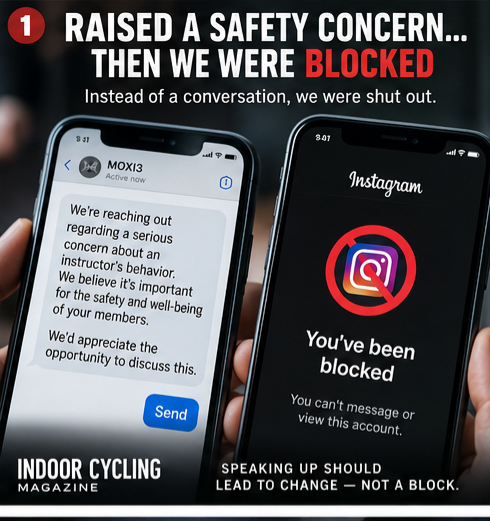
We contacted the studio because we believed the information warranted attention. Raising a concern is not the same thing as proving an allegation, and any person accused of misconduct deserves a fair opportunity to respond.
What surprised us was what happened afterward.
Rather than opening a dialogue with Indoor Cycling Magazine about the concern, our Instagram account was blocked.
For an organization operating in the health and fitness industry, that response raises questions.
Blocking a media organization does not establish that the underlying allegation is true. Nor does it establish wrongdoing by MOXI3. But when somebody raises a potentially serious member-safety concern, we believe the better response is communication: acknowledge the information, assess it, investigate where appropriate and respond professionally.
Other Customers Have Raised Different Concerns
Our experience also caused us to look more closely at public customer reviews.
To be clear, MOXI3 has received a substantial number of positive reviews. Many customers appear genuinely enthusiastic about its instructors, programming and community. This article should not obscure that fact.
Nevertheless, positive ratings do not mean critical experiences should be ignored.
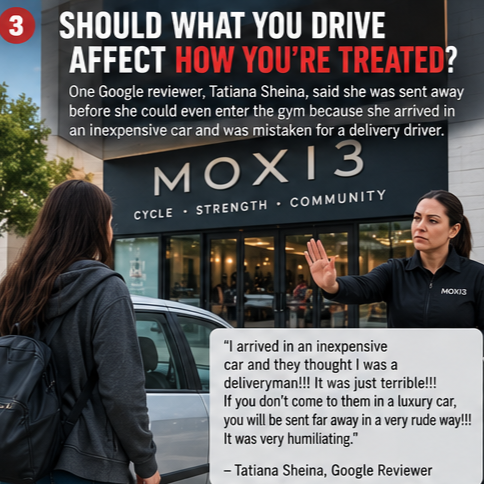
One Google reviewer, Tatiana Sheina, described an encounter in which she believed staff mistook her for a delivery driver because she arrived in an inexpensive vehicle. She characterized the experience as humiliating and said she was treated rudely.
That is one customer’s account. We cannot independently determine why the interaction occurred, and it would be inappropriate to present her interpretation of the staff’s motivation as established fact. But her experience deserves to be heard.
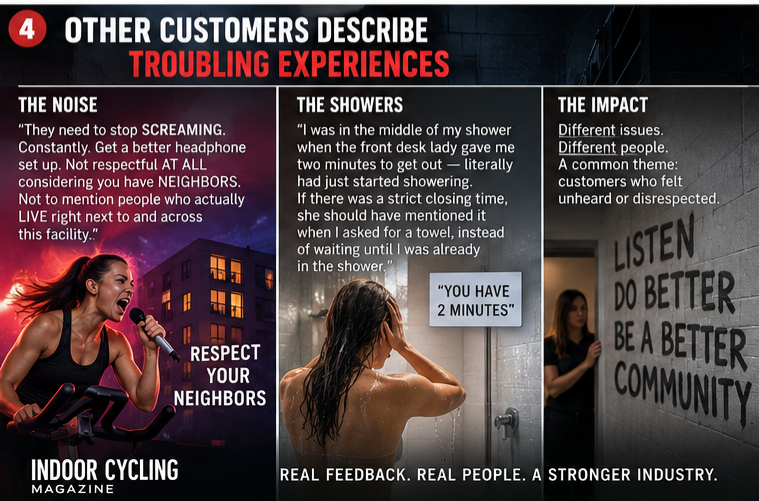
Another reviewer complained about excessive noise, specifically instructors “SCREAMING,” and argued that the volume was disrespectful to people living near the facility.
A separate reviewer described an unpleasant experience involving the showers. According to that customer, a front-desk employee gave her approximately two minutes to leave while she had only just begun showering. The reviewer said she would have appreciated being warned about the closing time when she requested a towel.
These complaints involve very different issues. None, standing alone, proves a systemic problem. Collectively, however, they illustrate why studios should listen carefully when customers, neighbours or industry participants raise concerns.
 The Larger Issue: How Should Fitness Businesses Respond to Criticism?
Indoor cycling is built around community.
Studios routinely use words such as community, belonging, empowerment and safety in their marketing. Those principles matter most when somebody says something management does not want to hear.
Blocking criticism may remove a person from an Instagram feed. It does not answer the criticism.
We would much rather see studios respond to serious concerns by asking questions:
What happened?
Who was involved?
Is there evidence?
Does somebody need protection?
Does the accused person have an explanation?
What policies apply?
Those questions protect everyone — complainants, instructors, members and the business itself.

An Open Invitation to MOXI3
Indoor Cycling Magazine is therefore extending MOXI3 an opportunity to respond.
We invite management to explain why our account was blocked following our communication with the studio and, more importantly, to explain its procedures for receiving and investigating allegations of inappropriate instructor conduct.
We will publish a substantive response or correction if evidence establishes that anything in this article is inaccurate.
Our purpose is not to declare MOXI3 guilty of allegations that have not been established. It is to ask why a legitimate concern from an established indoor-cycling publication apparently resulted in the messenger being blocked rather than engaged.
Fitness communities depend upon trust.
Sometimes protecting that trust requires listening to uncomfortable criticism rather than making the critic disappear from the screen.